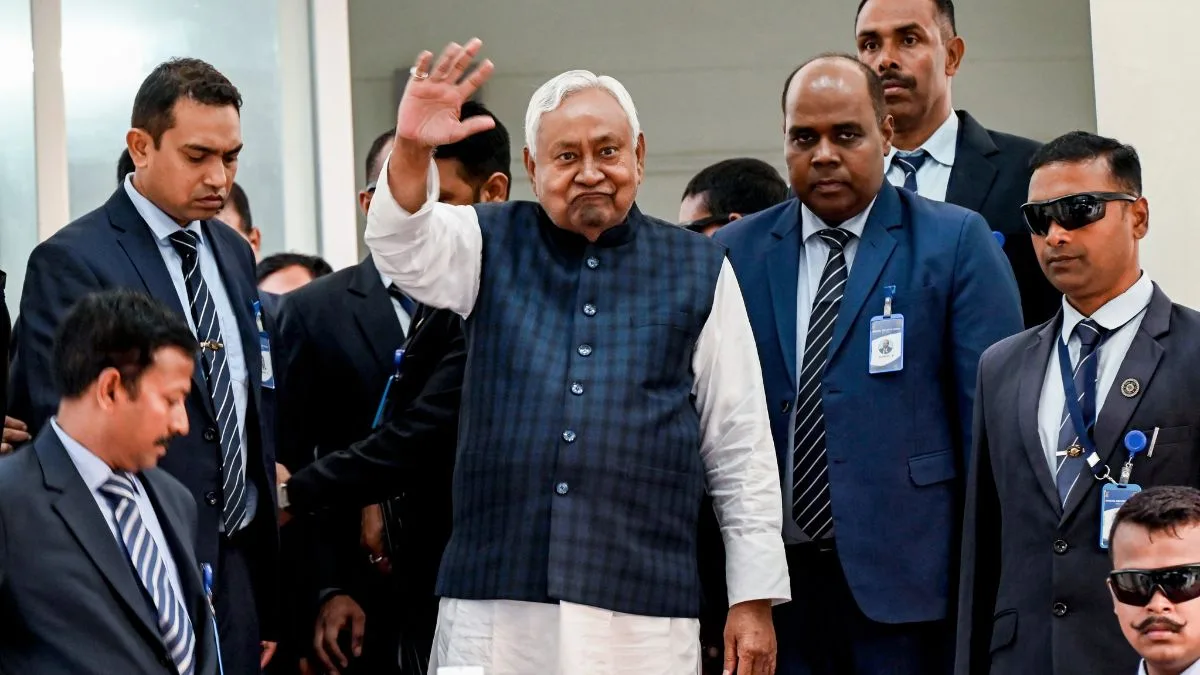
With the buzz of the Bihar Assembly elections finally fading, attention has now turned to how Chief Minister Nitish Kumar will steer the state toward rapid development, an essential condition for reviving the economy and fulfilling his ambitious promise of creating one crore employment opportunities.
Fresh from a historic mandate, 202 out of 243 seats, the NDA government under Kumar carries the weight of enormous expectations. Voters have entrusted him with a sweeping margin of 167 seats over the Grand Alliance led by RJD’s Tejashwi Prasad Yadav, reflecting a deep and unmistakable faith in his leadership.
Advertisement
Yet this overwhelming trust also brings significant pressure, for any failure on the development front could be politically costly in the years to come.
Looking back provides a sense of how Nitish Kumar first transformed Bihar’s political landscape. When he ended the 15-year Lalu-Rabri regime in 2005, the state’s elections were framed by the basic demands of “bijli, sadak aur paani” (electricity, roads and drinking water).Patna High Court’s description of the era as “Jungle Raj” became a lasting political weapon that opponents of Lalu Prasad wielded repeatedly, including in this election. Prime Minister Narendra Modi, Nitish Kumar, and other NDA leaders reminded voters of the risks of returning to that era, and the results show how strongly this message resonated.After taking office in 2005, Kumar moved quickly to restore law and order. Organised crimes such as kidnappings for ransom and contract killings, once rampant, were sharply reduced, and many perpetrators were jailed.
While crime has by no means disappeared, voters remain convinced that the current situation is far better than during the Lalu-Rabri years. Kumar himself has repeatedly argued that no society, not even technologically advanced countries like the United States, can ever be completely crime-free, a point he made during debates in the Bihar Assembly.
In his first term, Kumar attempted to draw major industrial investment to Bihar, reaching out to leading corporate groups such as Tatas, Mahindras, Bajaj, and Reliance. But despite improved law and order, none were prepared to invest. It soon became clear that security alone was not enough; industries needed better roads, an uninterrupted power supply, and a guarantee of safety and stability.
He therefore turned his attention to strengthening road infrastructure, setting a benchmark that any resident should be able to reach Patna from any corner of the state within six hours. This goal has largely been achieved, and efforts are underway to bring the travel time down to five hours.During his second term, from 2010 to 2015, Kumar prioritised improving power supply. Today, Patna and all district headquarters receive 24-hour electricity, while rural areas get more than 20 hours daily. In his third term, from 2015 to 2020, he expanded road connectivity to smaller villages and introduced 35 per cent reservation for women in state government jobs.In the fourth term, from 2020 to 2025, he fulfilled his pledge of providing ten lakh government jobs and creating employment opportunities for another 40 lakh people. His new promise—to create one crore jobs and employment opportunities between 2025 and 2030—sets an even higher bar.
During the recent election, Tejashwi Yadav announced grand promises of providing one government job per family, 200 units of free electricity, and monthly cash assistance of Rs 2,500 to all women under the “Mai Bahin Yojna.” But voters appeared sceptical. In contrast, Kumar’s commitments—such as 125 units of free electricity per household, an enhanced old-age pension of Rs 1,100, financial support of Rs 10,000 for 1.40 crore Jeevika Didis to start enterprises, and additional assistance of up to Rs 2 lakh—struck a more credible chord.Kumar himself emerged as a decisive factor in the NDA’s sweeping victory, and recognising his central role, the BJP quickly endorsed him as Chief Minister for the next five years.
The NDA has pledged to invest Rs 1 lakh crore over the coming five years to accelerate industrialisation. The plan envisions one industry in every district, ten new industrial parks, an increase in local employment to reduce migration, and the development of Bihar as a hub for Artificial Intelligence.
A new-age economy is expected to take shape, with potential investment of Rs 50 lakh crore aimed at creating a global workplace environment within the state. Despite these ambitions, Bihar continues to lag behind more developed states in per capita income, industrial output, and technological readiness, as reflected in periodic assessments by NITI Aayog.
As Nitish Kumar embarks on a fresh five-year term, the responsibilities before him are immense.
Bihar is still widely regarded as a backward state despite considerable progress in infrastructure, connectivity, and public services. The people now expect a decisive shift—an era of rapid development, meaningful job creation, and a halt to the large-scale migration that has long defined Bihar’s economic reality.